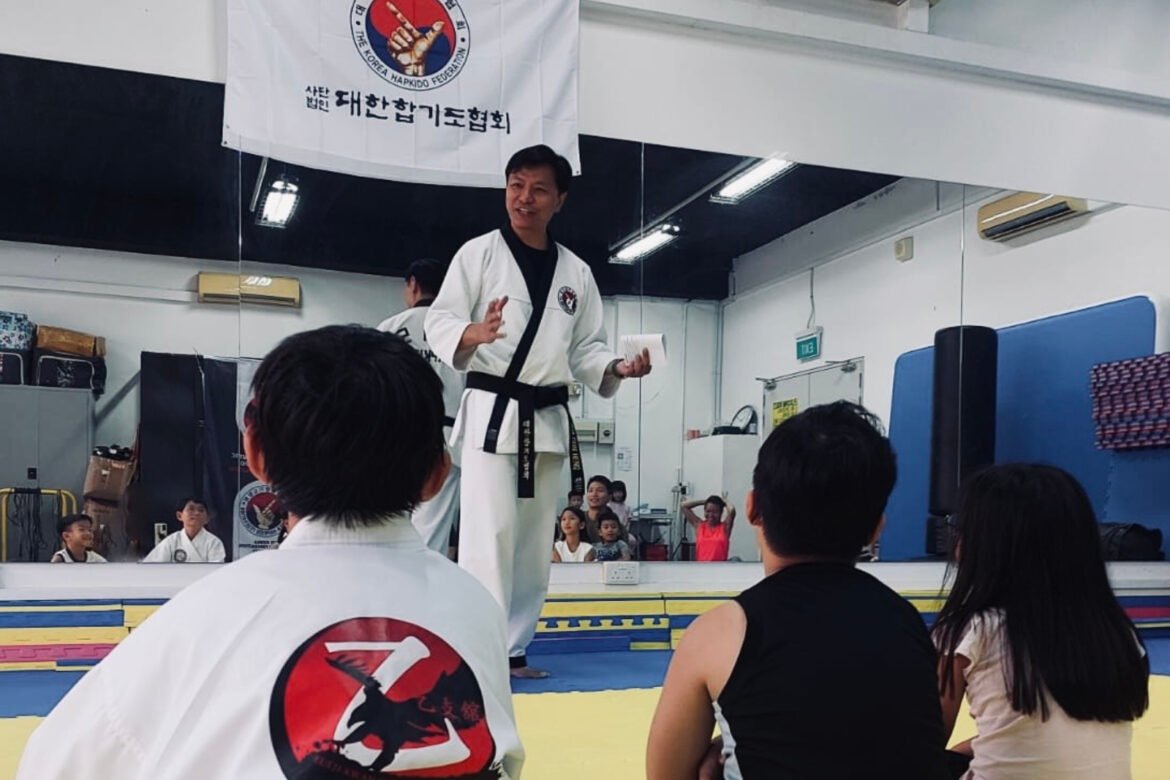
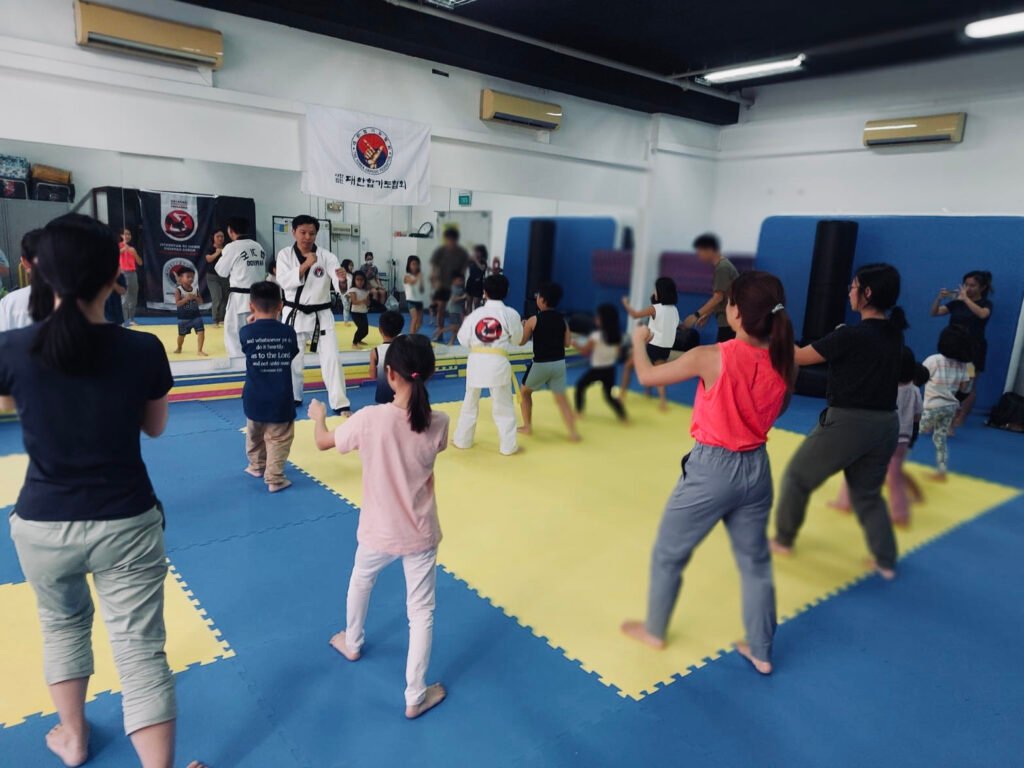
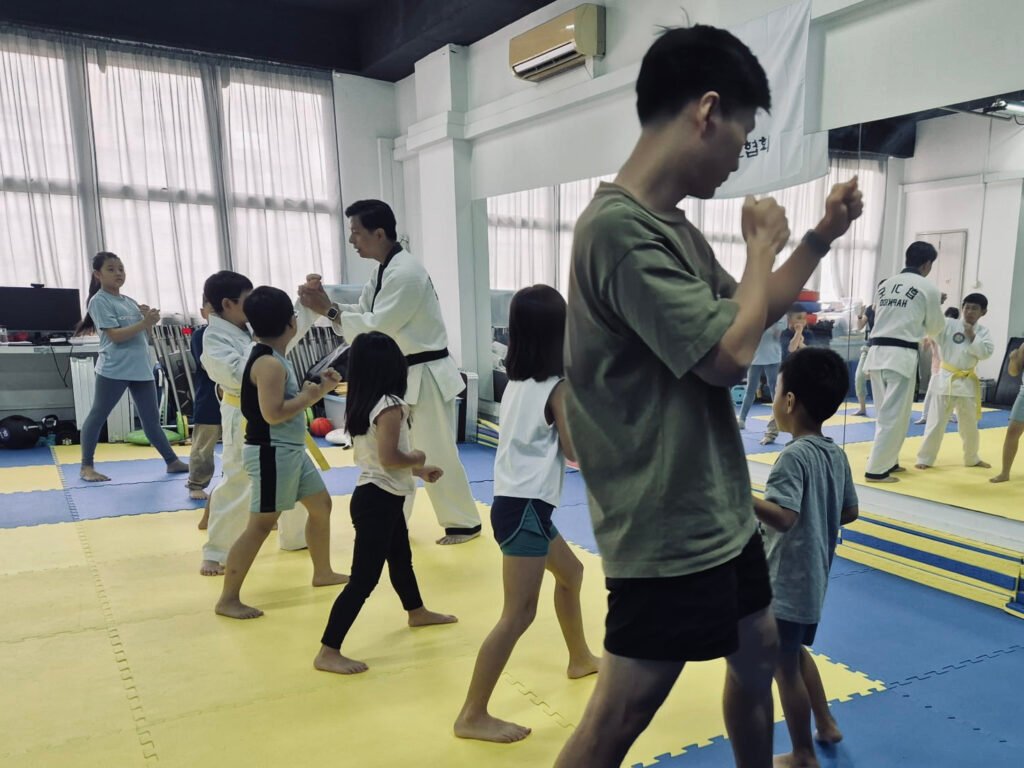
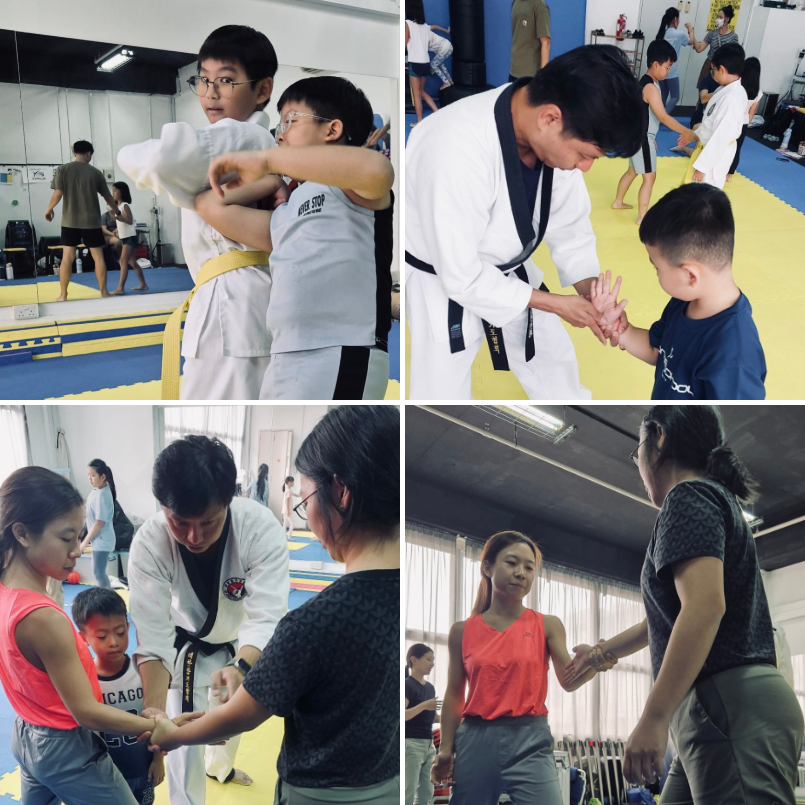
A small group of 16 home-school children and their parents joined us for a quiet 3-hour holiday session. For almost everyone, it was their first time trying Hapkido.
Together we explored some simple strikes and kicks, learned how to roll and fall safely, and practised gentle ways to escape grabs and holds.
We also spent a little time talking about something we believe matters even more than techniques — using calm words and a humble heart to turn away anger and avoid trouble altogether.
The children heard a simple idea they really took to heart: the very best Hapkido students aren’t the strongest or the loudest… they’re the ones who can stay calm and choose self-control even when it’s hard.
By the end of the morning there were tired legs, happy faces, and quite a few parents being gently thrown by their own kids. Everyone went home with something new — a little more confident child, a closer family moment, or just the feeling of trying something different together.
Thank you to each family who came and shared the mat with us. It was a privilege to spend the morning with you.
We truly believe that Hapkido has something for everyone, whether you are a child or a senior citizen. We hold weekly classes at affordable rates at Pioneer, Sembawang, and — in 2026 — Tampines. Feel free to contact us anytime if you’d like to know more.
Hapkido, a dynamic Korean martial art, is an ideal choice for young children and teens in Singapore, offering a holistic approach to physical, mental, and emotional development. At Euljikwan, we believe that Hapkido provides a unique blend of self-defense skills, martial arts values, and engaging challenges that empower students aged 7 and up to grow into confident, responsible individuals. Here’s why Hapkido is the perfect fit for your child or teen.
Building Confidence Through Self-Defense and Martial Arts Values
Hapkido equips young children and teens with practical self-defense skills, fostering a sense of confidence that extends beyond the dojang (training hall). By learning how to protect themselves, students gain the assurance to navigate the world with greater self-assurance. For instance, mastering techniques to escape a grip or defend against a bully helps them feel empowered in real-life situations. Alongside these skills, Hapkido instills core martial arts values such as respect, humility, perseverance, and integrity. These values strengthen their character, helping them develop a positive mindset and a resilient spirit. Physically, Hapkido enhances strength, coordination, and flexibility, further boosting their confidence as they see their bodies grow stronger with each class.
Tailored Learning for Young Children: Fun, Falls, and Fundamentals
Hand strikes and kicks – basic skills taught in Hapkido.
Everyone should run away from conflict, especially children!
For younger children, Hapkido focuses on foundational skills that are both practical and fun, tailored to their developmental stage. A key focus is learning how to tumble, roll, and fall safely—essential skills for preventing injuries during play with friends or in everyday activities. These techniques teach them how to land properly if they trip or fall, building resilience and improving reflexes. Additionally, children learn basic strikes, kicks, and self-defense moves, with an emphasis on escaping grips, recognizing unsafe situations, and running away from conflict. At this age, learning through fun and games is most effective, so we incorporate playful drills and activities to make classes enjoyable. For example, a game of “escape the grip” not only teaches self-defense but also keeps them laughing and engaged, ensuring they associate Hapkido with joy and camaraderie.
Empowering Teens: Strength, Flexibility, and Real-Life Scenarios
Escaping a collar grab and pinning the aggressor to the ground.
Overcoming hair grab and locking the aggressor.
For teens, Hapkido offers a more advanced curriculum that strengthens both body and mind. Through fitness and flexibility exercises, they build physical strength, improve coordination, and enhance their overall health—key for growing teens. Beyond physical training, teens learn to combine their newfound strength with Hapkido’s core principle of utilizing an opponent’s power and flow to execute self-defense techniques. This approach teaches them to remain calm and strategic under pressure, redirecting force rather than relying solely on brute strength. We also put them through practical scenarios, such as how to respond if a bully grabs their shirt collar or tugs at their hair. These real-life simulations prepare them to handle challenging situations with confidence and composure, equipping them with skills they can carry into adulthood.
Instilling Martial Arts Values in a Modern World
In today’s environment, where modern fighting competitions often glorify pride, arrogance, and trash-talking, the traditional values of martial arts can feel overlooked. Hapkido offers a counterbalance by emphasizing respect, humility, perseverance, and integrity. At Euljikwan Singapore, we believe competition is valuable, but it should be conducted with respect for opponents. The true fight in Hapkido is against oneself—a journey of self-improvement and betterment. We aim to help our students internalize these values, fostering responsible citizenship in Singapore. By learning to respect their peers, persevere through challenges, and act with integrity, our students grow into individuals who contribute positively to their communities, embodying the spirit of Hapkido both inside and outside the dojang.
A Fun, Motivating Environment for Growth
Our Hapkido classes are designed to push students to be their best selves while ensuring they have fun along the way. We’re not drill sergeants barking orders; instead, we act as motivators, encouraging each child and teen to challenge themselves and grow with every session. Whether it’s mastering a new technique or overcoming a fear of falling, our goal is for students to leave each class feeling stronger, more confident, and excited to return. The supportive atmosphere we cultivate helps them build lasting friendships, develop a sense of belonging, and create cherished memories of their Hapkido journey.
Join Us and See the Change
Hapkido is more than just a martial art—it’s a pathway to confidence, resilience, and personal growth for young children and teens. At Euljikwan Hapkido Singapore, we welcome students aged 7 and up to join us.
Come experience the transformative power of Hapkido for yourself! Together, let’s build a stronger, more confident you.
In Singapore, when one thinks of Korean martial arts, Taekwondo usually comes to mind. However, in South Korea, there is another martial art that is equally popular—Hapkido, the Korean martial art of self-defence. Hapkido encompasses a diverse array of techniques, including joint locks, grappling, kicks, strikes, pressure point techniques, and proficiency with various weapons such as the short stick, rope, cane, and more—all strategically employed to neutralize opponents.
Discovery Channel’sFight Quest, a documentary that follows two martial artists on their journey to Seoul to learn about Hapkido.
Hapkido Documentary
Discovery Channel’sFight Quest features an episode dedicated to Hapkido. In this episode, the hosts travel to Seoul, South Korea, to train under seasoned Hapkido Grandmasters. They immerse themselves in the rigorous physical and mental discipline required to master this versatile self-defense system. Throughout the episode, the hosts experience intense drills, sparring sessions, and demonstrations of Hapkido’s techniques, giving viewers an in-depth look at the art’s philosophy of blending offensive and defensive strategies.
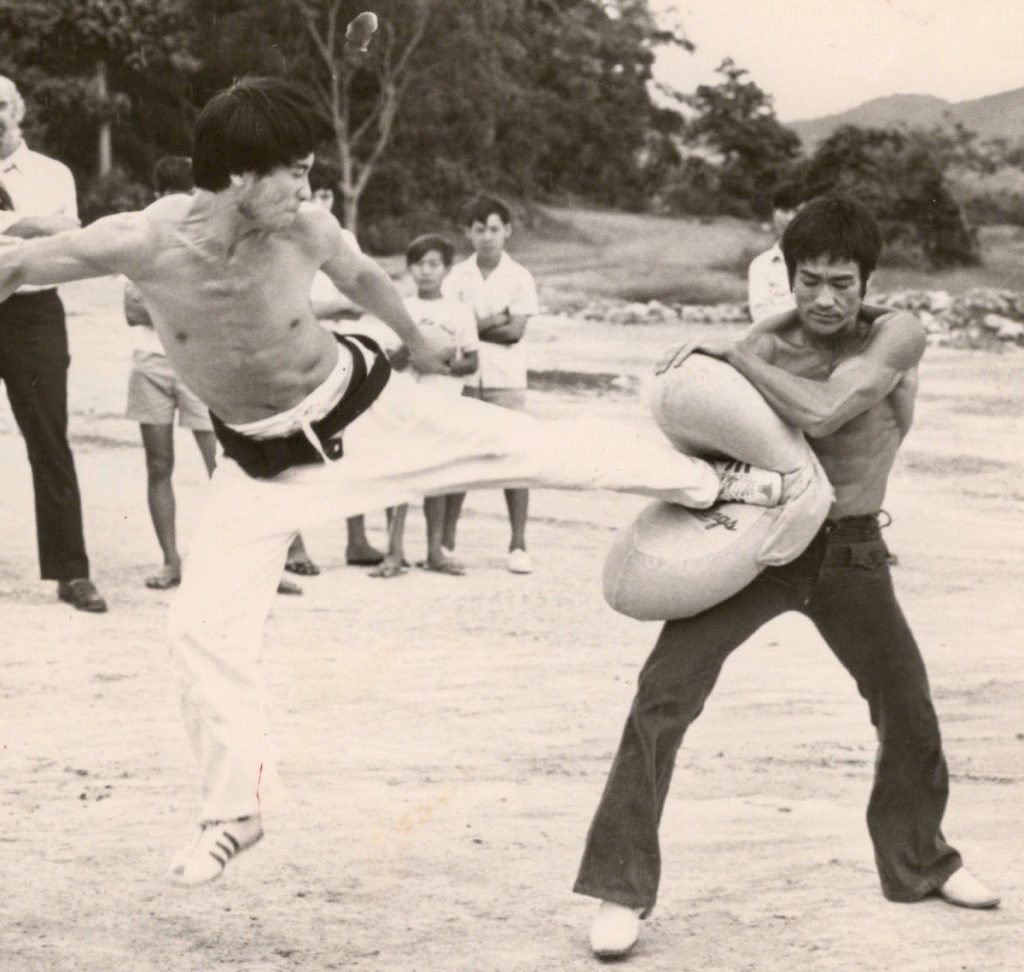
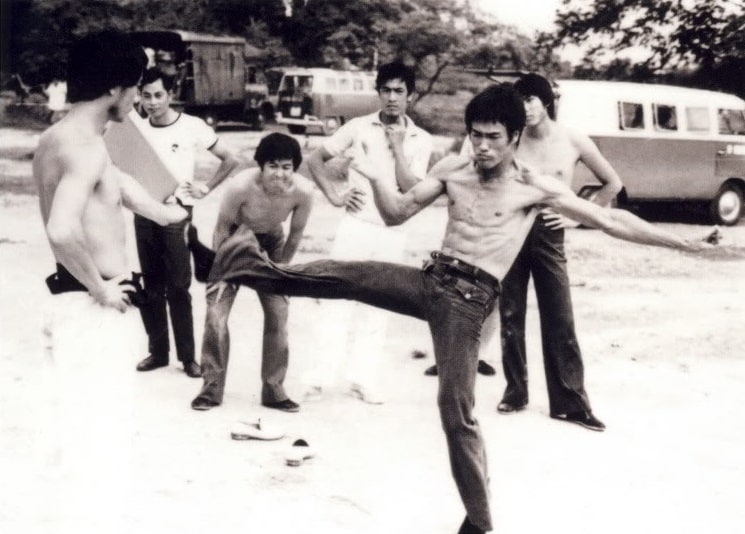
Hapkido Grandmaster Hwang In-Shik training with Bruce Lee off the movie setBruce Lee executing “outward circle” kick with Grandmaster Hwang In-Shik holding the kicking pad
Hapkido in Movies
Hapkido was heavily involved in the 1970s when the Hong Kong film industry bloomed. Bruce Lee who was influenced by Hapkido through Hapkido Grandmaster Hwang In-Shik introduced various kicks to his movies. Later in the 1980s, martial arts movie actors like Jackie Chan and Sammo Hung also learned and incorporated Hapkido into their films. The famous fight scene between Jackie Chan and GM Hwang in the movie The Young Master and Dragon Lord was Hapkido in action.
Grandmaster Hwang In-Shik showcasing the myriad Hapkido (not Chinese Kungfu) techniques in The Young Master
Hapkido in the Forces
The effectiveness of Hapkido has made it a trusted choice for professionals in high-stakes environments. It’s used by Korean police forces, military units, and presidential bodyguards. Here we see Grandmaster Kim introducing Hapkido to the American military based in Korea.
Korea based American military Hapkido school with Grandmaster Kim Beom Chul
Hapkido doesn’t rely on brute strength. Instead, it utilises the power of your opponent against them, harnessing the mechanics of the human body through the use of small circles, triangles, and precise angles. You’ll learn hand strikes, kicks, and myriads of locking techniques that can quickly and effectively subdue an opponent. This makes it especially suitable for anyone looking for a practical means of self-defense. Hapkido teaches you how to protect yourself confidently and effectively, regardless of your size or strength.
This video provides an overview of Hapkido with strikes, locks, throws and weapons.